
Beyond the talk – Katja Hoyer, ‘Beyond the Wall’
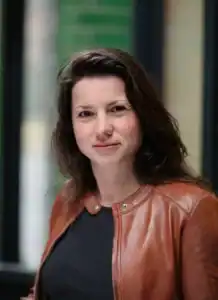
Young Critic, Holly, got the chance to speak to Kaja Hoyer about her new book ‘Beyond the Wall’. Read what she had to say about everything East Germany.
As part of Lichfield Literature Festival I went to the hub at St Mary’s to listen to Katja Hoyer talk about East Germany between 1949-1990. While I was still in the top of Lichfield library, I felt as if I had been transported back to the GDR for one fascinating hour.
The talk was held in the Hub at St Mary’s, which is above Lichfield library and up the stairs when you first enter. It’s adorned with old spears and beautiful stain glass windows and there’s a bar where you can buy refreshments. This quaint little venue was the perfect place for the talk, and it fit the audience in comfortably.
The talk itself was fantastic, Hoyer was informative and serious, while also keeping the talk humorous and engaging. I’ll admit that I wasn’t an expert by any means going into the talk but Hoyer made the subject so simple to understand. Whether you were a bona-fide Berlin nerd or a year nine with little to no prior knowledge in the subject, it was both interesting and informative.
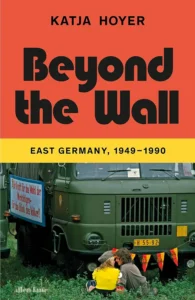
One of my favourite things about the talk was how honest it was, highlighting both the positive and negative sides of East Germany. Hoyer came off as completely unbiased, not villainising East Germany but not making it the hero either. She made a point of saying that East Germany is a footnote, while West Germany got all the limelight. She wrote ‘Behind the Wall’ to shine a spotlight on East Germany for a change, in all its glory and ignominy.
Something I really picked up on through during the talk was Hoyer’s interest and passion for the topic. She visibly loved teaching people about the GDR, which I believe is the most important thing to have if you want to teach someone something. This topic held a special place in Hoyer’s heart and she wanted to enlighten everyone on the topic.
My only grievance with the talk was that there wasn’t enough time. There were parts of the timeline that she glossed over, hoping to come back to it later but she ran out of time. There was going to be time for questions at the end but we were only able to fit in one.
After the talk, I was lucky enough to catch Hoyer for an interview, going deeper into her early life in the GDR. She was only a small child when the wall came down, and I asked her whether she would have different views on the GDR if she was an adult at the time. She explained, “most people I know that were that age and older have got really emotional views on that, either positive or negative.”
I also asked if she remembered when the wall came down, as she was very young around that time and she replied, “I do (remember it) in the sense that it felt like this big moment where adults suddenly weren’t sure what was going to happen next and that was really, really weird.” Hoyer also talked about how her father worked in the military and had to find a new job after the reunification, and her mother had to retrain as a teacher as West Germany didn’t acknowledge any of the East German qualifications.
In conclusion, the talk left me really wanting to delve into the nuances and details of East Germany, a more complex society in Hoyer’s recollection than is often portrayed. I left the talk with a signed book that I couldn’t wait to read.
By Holly M
If you’re aged 11-18 and would like to be a festival reviewer, applications for Young Critics are open for Lichfield Festival – find out more on our website https://lichfieldfestival.org/aspire/young-critics/