
“I’d tell her to not be nice” – The King’s Mother by Annie Garthwaite
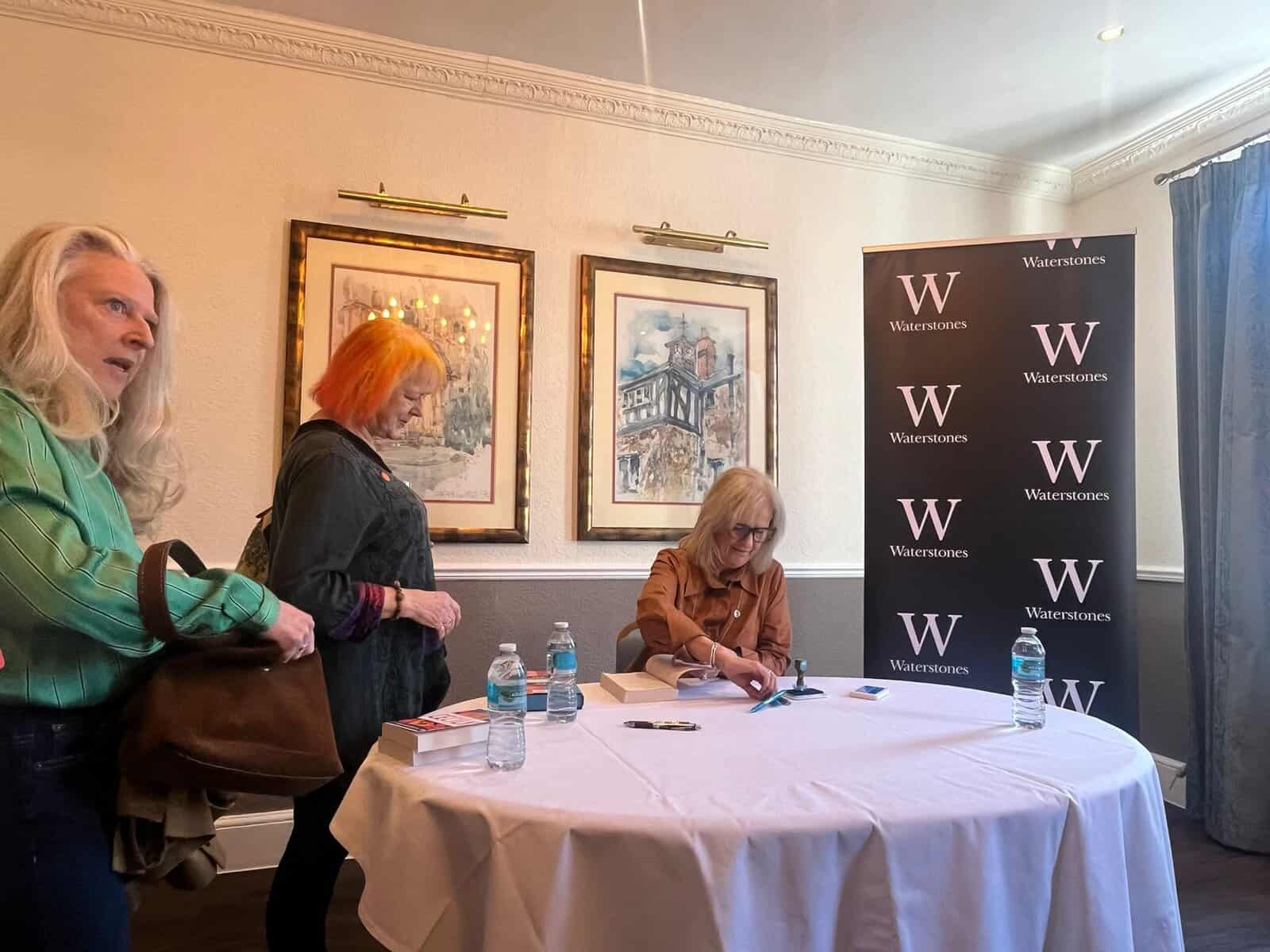
Annaya looks back on Annie Garthwaite’s appearance at Lichfield Literature Festival, she tells us what we should learn from historical women and how Garthwaite came to write ‘The Kings Mother’.
Attending the talk on The King’s Mother by Annie Garthwaite felt less like a typical event and more like a powerful reinterpretation of history through a feminist lens. Women have been hidden in the shadows despite the power struggle they experienced, yet Garthwaite branded these women as being more significant in comparison to men. Hosted in an engaged atmosphere, Annie even gave out personalised badges with the names of women to interact with the audience. She invited us to reconsider the roles
 women played during the Wars of the Roses, those very roles that have often been overlooked or diminished because women were assumed to exist only in a man’s corner.
To begin, Garthwaite challenged the long-standing notion that medieval history is defined solely by male power struggles. Instead, she reframed the Wars of the Roses as a time where women, though not fighting with swords, “called the shots” through influence, intelligence, and authority. This idea became a central theme of the afternoon: the concept that women were not passive figures waiting for rescue, nor merely victims of a patriarchal system, but active participants shaping political and social outcomes.

One of the most compelling aspects of the talk was Garthwaite’s focus on Cecily Neville. Born in 1415 and surviving the entirety of the Wars of the Roses, Cecily emerges as an important figure. She was the matriarch of a powerful dynasty, mother to four sons, including two kings, AND a woman trusted with significant responsibility, even being placed at the head of the household during Edward’s military departures. Through Garthwaite’s research and storytelling, Cecily is restored as a “major protagonist” of history, rather than a background figure defined only by her relationships to men. I asked Annie what she would say to Cecily today, especially because of the women stereotypes she actively had to challenge, and she replied “I’d tell her to not be nice.” I wholeheartedly agree. Women are bound to what men tell us, even today, and I think it is time to change that. She mentioned to not be nasty, but not to conform to these societal expectations of women being “innocent”.
The discussion also expanded to include other influential women of the period, such as Margaret of Anjou and Elizabeth Woodville. Margaret was described as politically sharp and deeply involved in the conflict, while Elizabeth’s controversial marriage to Edward IV highlighted how women could disrupt established power structures. Particularly striking was the story of Margaret Beaufort, whose early and traumatic experiences underscore the harsh realities faced by women, even those who would go on to wield immense influence as the mother of Henry Tudor.
Garthwaite also reflected on her own journey to writing The King’s Mother, revealing that the idea first came to her in her early twenties. However, societal expectations and career pressures delayed her pursuit of writing for decades. It wasn’t until her mid-fifties that she left her business career, completed a Creative Writing MA, and finally brought Cecily’s story to life. This personal narrative mirrored the themes of the talk itself: women navigating systems that often limit them, yet still finding ways to assert their voices.
Ultimately, this event was not just about a book, but about reclaiming women’s place in history. It challenged us to question whose stories are told and whose are left out. In doing so, it made a compelling case for why revisiting the past through a feminist perspective is not only valuable, but necessary. Garthwaite’s enthusiasm, sparked by an inspiring history teacher and even a teenage fascination with Richard, was truly infectious.
By Annaya H
Annaya is a pupil in Year 11, her favourite subject has to be History. She aspires to become a human rights barrister ultimately because she wants to empower the voices of the voiceless. Her inspiration to be a young critic stems from my passion in analysing and offering perspectives that others may not notice — a key example being George Orwell, who has produced many political novels correcting systemic injustices.
If you’re aged 11-18 and would like to be a festival reviewer, applications for Young Critics are open for Lichfield Festival – find out more on our website https://lichfieldfestival.org/aspire/young-critics/