
“Listening can tell you an awful lot” – Our brains, our selves by Masud Husain
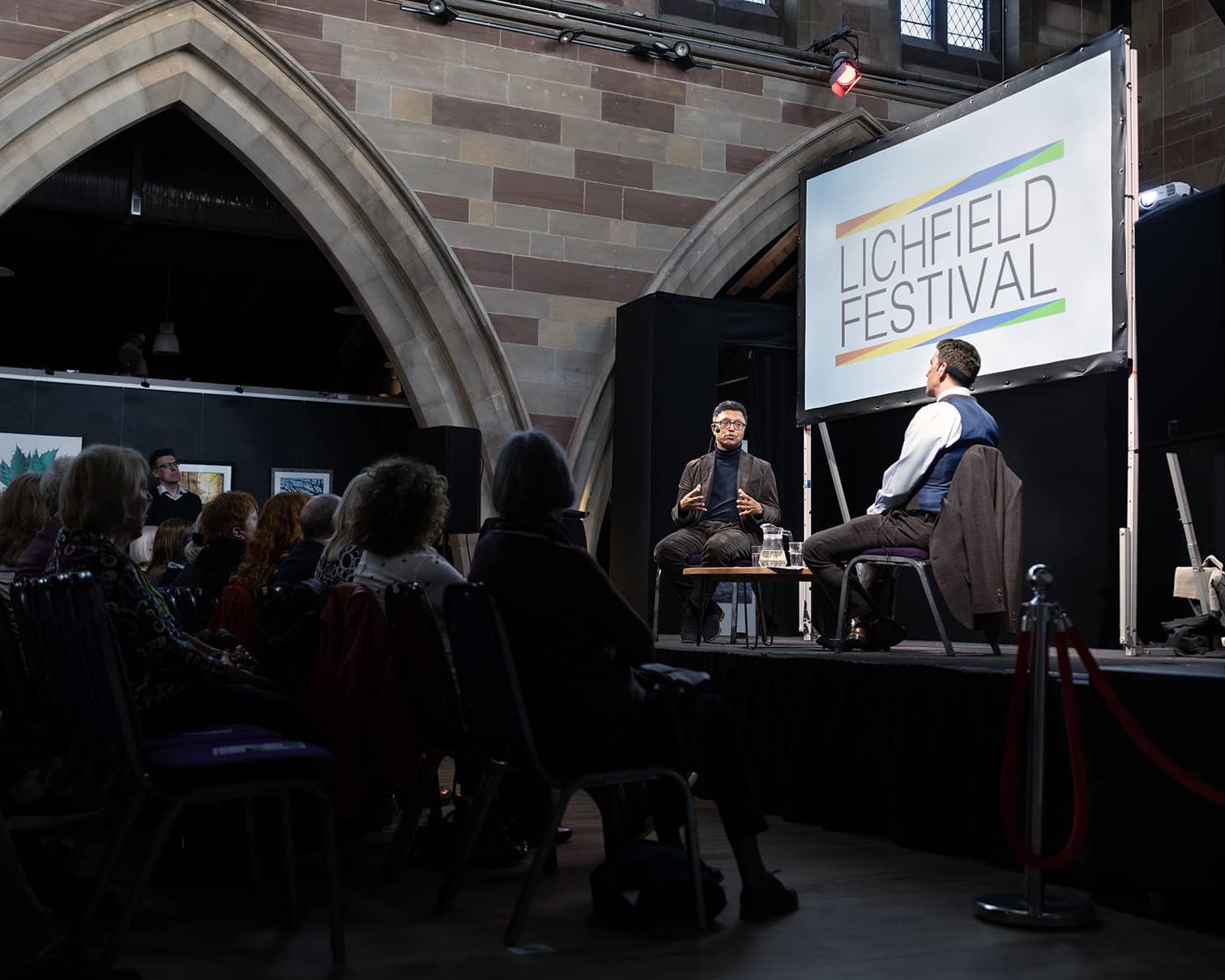
Young Critic, Emelia, got the chance to hear Masud Husain speak about his new book ‘Our brains, our selves’ at Lichfield Literature Festival in March.
At the Hub at St Mary’s in Lichfield, Masud Husain gave a talk about what the human brain tells a neurologist about a person’s identity and ‘self’. He used the term ‘unbelonging’ to show the effect that a person’s brain disorders can have on their personal position in society. Through a comfortable, engaging discussion, Husain presented the ideas of science in a way that the average person could understand perfectly.
Interestingly, the discussions primarily focused on the experiences of the patients he had encountered in his role. The personal note to the stories conveyed a deep care for his industry and a genuine desire to help people who struggle with the neurological disorders he studies. The story of a man who lost his motivation stood out to me, how a small stroke caused a highly driven individual to lose everything. I was struck by how little people understood this person, believing him to be depressed when in reality he was happy in his life. With the treatment from Husain, this man was able to return to living his life to the fullest. In his words, “apathy is a problem across brain disorders.” He acknowledges that the loss of motivation can affect many people in different ways when they struggle with brain disorders, drawing attention to the importance of studying the brain which we know so little about.
One particularly interesting idea that he put forth was knowing you have control over your actions being important for your sense of self, the idea of body ownership. He tells the story of a dancer with a head injury who lost the agency of her right arm and leg, the dancer lost her sense of belonging in her activity. I found it interesting that someone’s life can be changed completely by one significant event in their past.
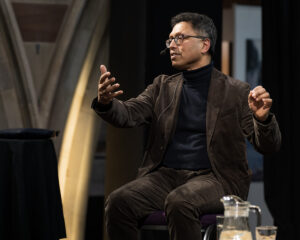
Credit Douglas Armour
I found that Masud Husain interacted well with the audience, answering questions on topics like how we age, tic disorders like Tourette’s Syndrome and the effects of non-physical trauma with detail and an engaging level of enthusiasm. His entire talk felt professional yet simple to understand for someone who doesn’t know a lot about the science of it.
Overall, I felt that Masud Husain perfectly encapsulated his work into a talk that was easily accessible and enjoyed by the full audience.
By Emelia C
Emelia is in Year 11 at school and her favourite subjects are English and French but she has a passion for history. She is currently unsure of what she wants to do when she is older but she knows she wants to work in a field that allows her to be creative as she loves to write. Her favourite author at the moment is Holly Jackson, who wrote the a Good Girls Guide to Murder series. She wanted to become a young critic because she has always loved writing and loves to share opinions on the media she consumes. She loves to write because she finds it a good way to share what she’s thinking and feeling. Live performances also appeal to her as she’s often visited the theatre and enjoy listening to others talking to an audience. She has found her experience as a young critic so far exciting and inspiring.
If you’re aged 11-18 and would like to be a festival reviewer, applications for Young Critics are open for Lichfield Festival – find out more on our website https://lichfieldfestival.org/aspire/young-critics/