
Robert Newman talks ‘Intelligence’ at Lichfield Literature Festival
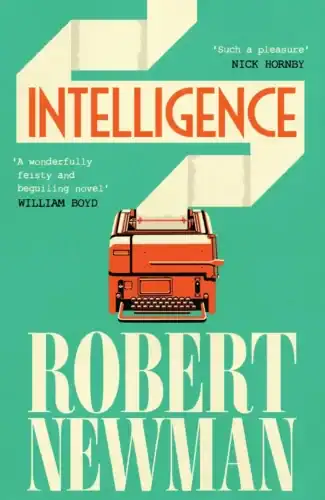
Young Critic, Amy, looks back on Rob Newman’s visit to Lichfield Literature Festival. With Newman’s takes on the benefits of comedian-authors and 1930s female philosophers, it was an event that pleased both young and old.
The Hub at St Mary’s, above Lichfield’s local library, was the perfect backdrop for an interview with Newman about his newest historical fiction novel, ‘Intelligence’. His comedic spy-thriller tells the tale of female Oxford philosophers’ role in the Second World War, as Newman is particularly interested in 1930s philosophy, despite being well-known for an early career in ‘90s comedy. Discussing his inspirations, he acknowledged he is unsure why this era of history so interests him, but that he firmly believes authors should write about what most fascinates them.
In keeping with the theme of distinguished university fellows and comedians, the evening opened with a hilarious reading of the Lichfield Festival’s Tiny Story Competition winner by Stephen Fry! From his work on ‘Blackadder’ to recent BBC hit ‘Celebrity Traitors’, Stephen Fry is a cross-generational national treasure, and this prestige was certainly felt in the audience’s immediate hush as his recording began. The story certainly deserved its flowers as a contribution from such a young candidate, discussing very current themes of artificial intelligence to create an almost black-comedy-esque societal critique. The audience were thoroughly impressed.
As Robert Newman introduced himself and his latest novel, I was immediately struck by his authenticity. As a younger audience member, I was previously unfamiliar with Newman having only heard his name at the family dinner table, but I am sure his pre-existing fans in attendance expected nothing less than his relatable persona. Newman’s understanding of women’s position in the era is clearly heavily researched as he discussed examples of women’s theories being ignored in their time but were ultimately useful. This informs his characters, who are not hired to support the war effort but still have an innate intellectual interest. From his readings, however, it was clear he does not let these issues dampen the power of his female characters.
Newman’s first reading allowed his wit to shine through in his descriptions of French onlookers and his protagonist. This was something I later picked up during the questions section, wondering if these parts of storytelling benefitted from his comedy skills. Newman emphatically agreed; there are few transferrable skills from comedy to authorship, but he certainly sees characterisation as one. He recalled ‘enjoying spending time with [his] characters’, showing Newman not only channels parts of himself into them, but views them as real and people he knows so well, he need only ‘listen’ as they ‘speak’ their dialogue to him.

He went on to discuss the themes of evolution, war, and philosophy covered in ‘Intelligence’. Fittingly, he personalised the idea of evolution with a reference to the herbal gardens of Lichfield’s own Erasmus Darwin and then went on to discuss the wartime evolutionary theory that blitz hideouts would restore humans to their early, troglodytic state. This allowed him to transition into a discussion of war, arguing humans are ‘animals, not machines’, which humanised the huge statistics of people involved, as literature set in the era often does. Finally, he turned to a positive theme of the novel, of the strangely optimistic 1930s philosophy, mimicking the very philosophers he discussed. I was shocked by the concept but understood why it so resonated with Newman as he also discussed how literature, though meaningful, should also be entertaining and a means of escape.
Robert Newman was a slightly shy interviewee, but his self-awareness worked in his favour, making him relatable. His banter with the audience particularly emerged during the second reading wherein he apologised for his parental, condescending read-aloud style and very authentically stopped and started to avoid spoilers. He certainly made the right call, as much of the audience rushed to buy a signed copy of ‘Intelligence’ after the talk. The audience clearly thoroughly enjoyed the talk, and Newman’s promotion of the book was certainly successful, as I took a copy home myself!
By Amy S
Amy is a Year 13 student with plans to study English Literature after finishing school, and to eventually work in journalism. She is a huge Shakespeare fan, as is evident from her glowing review of Twelfth Night 2025, but her been recently obsessing over Arthur Miller, as another huge influence on tragic drama. As you can tell from her interest in playwrights, Amy’s interests within literature stems from her love of performance. She has participated in dance and youth theatre for as long as she can remember and find most live performances extremely moving due to the nostalgia they bring her. However, certain performances are unexpectedly moving and her interest in being a Young Critic, and reviewer in general, comes from a need to unpick why this is; putting words to the theatrical ‘magic’ of the arts.
If you’re aged 11-18 and would like to be a festival reviewer, applications for Young Critics are open for Lichfield Festival – find out more on our website https://lichfieldfestival.org/aspire/young-critics/